
✏️ Exciting News: Our website is getting a fresh new look - stay tuned! 💻

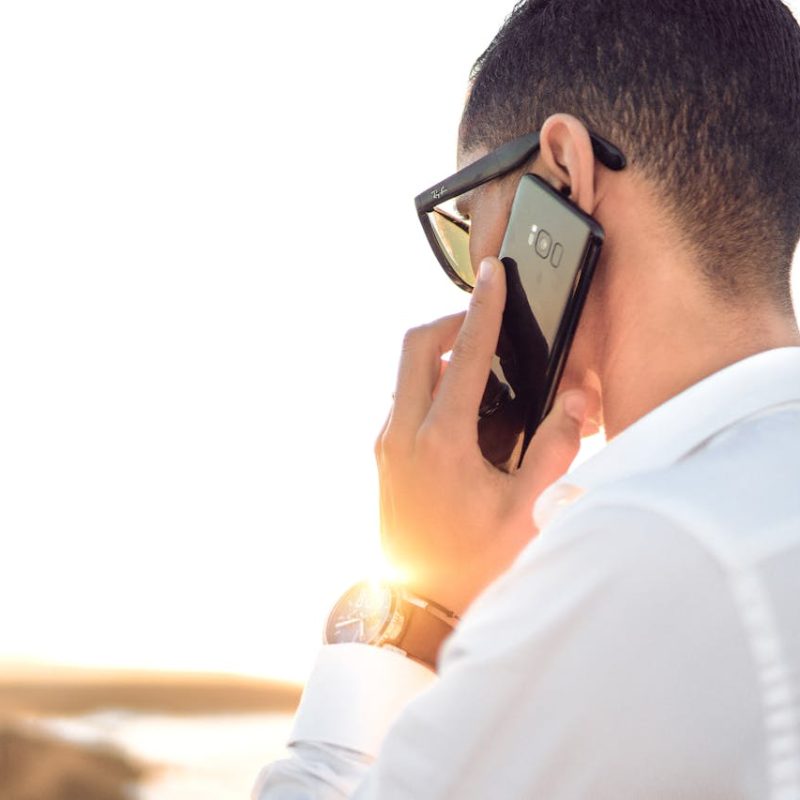


In EU countries, you can make calls with your cell phone under the same conditions as at home. But even in Europe, you’re not completely safe from roaming traps.
With your flat rate contract, you can use your cell phone on vacation just as you do at home. Provided you’re on vacation in an EU country (or in Iceland, Norway or Liechtenstein).
Sure, your data credit will melt away when you’re streaming like crazy in the Italian sun. But that would also be the case at home. You won’t incur any additional costs at first. Only when your credit is gone, your provider can charge roaming surcharges.
You can also fall into the roaming trap within the EU – in border areas. For example, if you are on a Greek island near Turkey, a Turkish cell phone mast may take over. Your provider will then charge you for roaming. It’s best to switch off the automatic network search in border areas.
This also applies to Austria: In Vorarlberg, your cell phone could jump to a Swiss network. Roaming costs would be the consequence.
Outside the EU, surfing or making a call can be really expensive. Amounts up to € 5 per minute are common, especially in South America and Southeast Asia.
Normally you will be informed about the costs via SMS. If you don’t get a text message with the costs, find out exactly how much you’ll be charged for using your cell phone.
Turkey
Egypt
Tunisia
Thailand, India, Indonesia and the whole Southeast Asian region
USA
South America
If you have accumulated 60 euros in roaming costs, your provider will normally cut off your data roaming. You will receive a warning SMS when you have used 80% of this amount.
But beware: With some providers, the maximum limit for roaming can be set individually. Check this to be on the safe side!
Ask your provider about roaming packages and see if you can get out of the country more cheaply.
Switch off data roaming and look for a WiFi hotspot. Almost all restaurants and public facilities offer these free of charge.
Do without phone calls and SMS and rather use internet services when you are in a WiFi hotspot. Internet telephony (VOIP) via Skype will then cost you nothing.
Buy a prepaid card with internet data volume in a specialized store in your vacation country. You will have a different phone number, but it doesn’t matter for messenger services and social media. Note: Only works with unlocked cell phones.
When you listen to a message on your voicemail abroad, you are charged for two active and one passive call. The passive one is caused by the recording of the call. Your voicemail box then has to send the message back to Austria so that it can be saved – this is how the first active call is created. If you then also listen to it, you will be charged for another active call. This can be very expensive!
Do you have LTE? Then you could fall victim to ghost roaming in non-EU countries and in border areas, even if you have deactivated data roaming.
This is because the LTE standard needs a data connection to operate: small data packets are constantly going back and forth. Over time, this causes considerable costs. Antidote: Temporarily turn down your cell phone to 3G.
None of the EU rules on roaming apply to planes and ships. There are often WiFis there, for whose use sometimes horrendous prices are charged. It’s best to go into flight mode when you get on a ship! This applies to cruise ships as well as ferries.
More information about roaming can be found on the website of RTR, the Austrian Regulatory Authority for Broadcasting and Telecommunications. Link to
https://www.rtr.at/de/tk/TKKS_Roaming
https://www.rtr.at/de/tk/TKKS_Roaming






Updates on exhibition, program & events
Updates on exhibition, program & events
FLiP Wien
Erklärung zur Barrierefreiheit
Einhaltungsstatus
Wir sind der festen Überzeugung, dass das Internet für jeden verfügbar und zugänglich sein sollte, und sind bestrebt, eine Website bereitzustellen, die für ein möglichst breites Publikum zugänglich ist, unabhängig von den Umständen und Fähigkeiten.
Um dies zu erreichen, streben wir eine möglichst strikte Einhaltung der Web Content Accessibility Guidelines 2.1 (WCAG 2.1) des World Wide Web Consortium (W3C) auf AA-Niveau an. Diese Richtlinien erläutern, wie Webinhalte für Menschen mit einer Vielzahl von Behinderungen zugänglich gemacht werden können. Durch die Einhaltung dieser Richtlinien können wir sicherstellen, dass die Website für alle Menschen zugänglich ist: für Blinde, Menschen mit motorischen Beeinträchtigungen, Sehbehinderungen, kognitiven Behinderungen und mehr.
Diese Website verwendet verschiedene Technologien, die sie jederzeit so zugänglich wie möglich machen sollen. Wir verwenden eine Barrierefreiheitsschnittstelle, die es Menschen mit bestimmten Behinderungen ermöglicht, die Benutzeroberfläche (UI) der Website anzupassen und sie an ihre persönlichen Bedürfnisse anzupassen.
Darüber hinaus nutzt die Website eine KI-basierte Anwendung, die im Hintergrund ausgeführt wird und die Barrierefreiheit ständig optimiert. Diese Anwendung korrigiert den HTML-Code der Website und passt ihre Funktionalität und ihr Verhalten an die von blinden Benutzern verwendeten Bildschirmlesegeräte und an die von Personen mit motorischen Beeinträchtigungen verwendeten Tastaturfunktionen an.
Wenn Sie eine Fehlfunktion festgestellt haben oder Verbesserungsvorschläge haben, freuen wir uns, von Ihnen zu hören. Sie können sich per E-Mail an die Betreiber der Website wenden: info@financiallifepark.at
Screenreader und Tastaturnavigation
Unsere Website verwendet die ARIA-Attribute-Technik (Accessible Rich Internet Applications) sowie verschiedene Verhaltensänderungen, um sicherzustellen, dass blinde Benutzer, die die Website mit einem Screenreader besuchen, die Funktionen der Website lesen, verstehen und nutzen können. Sobald ein Benutzer mit einem Screenreader Ihre Website aufruft, wird er sofort aufgefordert, das Screenreader-Profil einzugeben, damit er Ihre Website effektiv durchsuchen und bedienen kann. Hier erfahren Sie, wie unsere Website einige der wichtigsten Anforderungen von Screenreadern erfüllt, zusammen mit Screenshots von Code-Beispielen:
Auf unserer Website unterstützte Behinderungs-Profile
Weitere Anpassungen der Benutzeroberfläche, des Designs und der Lesbarkeit
Kompatibilität von Browsern und unterstützenden Technologien
Wir sind bestrebt, eine möglichst breite Palette von Browsern und unterstützenden Technologien zu unterstützen, damit unsere Benutzer die für sie am besten geeigneten Tools mit möglichst wenigen Einschränkungen auswählen können. Aus diesem Grund haben wir sehr hart daran gearbeitet, alle wichtigen Systeme zu unterstützen, die über 95 % des Benutzermarktanteils ausmachen, darunter Google Chrome, Mozilla Firefox, Apple Safari, Opera und Microsoft Edge, JAWS und NVDA (Screenreader).
Anmerkungen, Kommentare und Feedback
Trotz unserer größten Bemühungen, es jedem zu ermöglichen, die Website an seine Bedürfnisse anzupassen, kann es sein, dass es immer noch Seiten oder Abschnitte gibt, die nicht vollständig barrierefrei sind, gerade barrierefrei gemacht werden oder für die es keine angemessene technische Lösung gibt, um sie barrierefrei zu machen. Wir arbeiten jedoch kontinuierlich daran, die Barrierefreiheit zu verbessern, indem wir Optionen und Funktionen hinzufügen, aktualisieren und verbessern sowie neue Technologien entwickeln und einführen. All dies dient dazu, im Zuge des technologischen Fortschritts ein optimales Maß an Barrierefreiheit zu erreichen. Bei Fragen wenden Sie sich bitte an info@financiallifepark.at
You are currently viewing a placeholder content from Vimeo. To access the actual content, click the button below. Please note that doing so will share data with third-party providers.
More InformationYou are currently viewing a placeholder content from YouTube. To access the actual content, click the button below. Please note that doing so will share data with third-party providers.
More InformationYou need to load content from reCAPTCHA to submit the form. Please note that doing so will share data with third-party providers.
More InformationYou are currently viewing a placeholder content from Google Maps. To access the actual content, click the button below. Please note that doing so will share data with third-party providers.
More InformationYou are currently viewing a placeholder content from Mapbox. To access the actual content, click the button below. Please note that doing so will share data with third-party providers.
More InformationYou are currently viewing a placeholder content from OpenStreetMap. To access the actual content, click the button below. Please note that doing so will share data with third-party providers.
More Information