✏️ Exciting News: Our website is getting a fresh new look - stay tuned! 💻

Donations

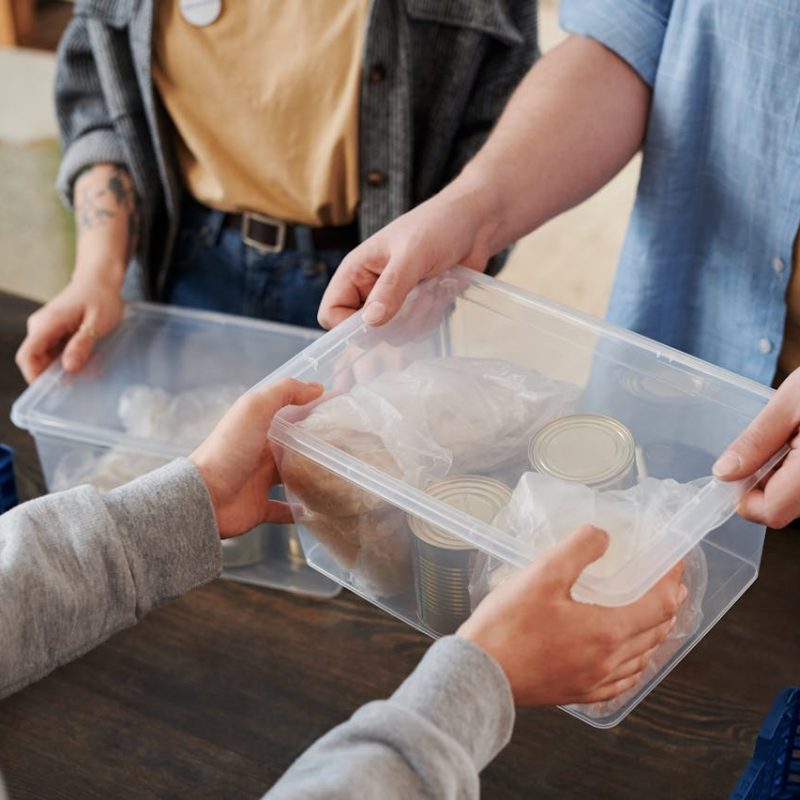
Container mit Lebensmittel
Should I make free gifts?
Most charities and aid projects – for people, for animals or for planet earth – depend on donations. If and what you want to give is entirely up to you. There is no obligation. But there are also very few arguments for not making a contribution.

Giving to those who have nothing

About two thirds of Austrians give donations. Most of them do it because they want to help or sympathise with those who cannot give anything because they have nothing. They also do it to support rescue projects for endangered species – or our whole planet.

Giving things or time instead of money

Organisations that assist poor people, work to protect the environment or engage in other charitable and advocacy work need money for their activities. The government supports these activities by granting tax deductibility for charitable donations. You can deduct the amount of your donations from your income which means that you have to pay less in taxes. However, this applies only to donations given to organisations listed on the government register of eligible charities[KW1] .

https://service.bmf.gv.at/Service/allg/spenden/show_mast.asp#aw

Clothes, toys – and blood

You do not necessarily have to donate money to contribute to a worthy cause. You may also give things you do not need (any more), but which are useful for others, such as toys or clothes you have grown out of (contributions to used clothes collections are the most frequent type of donation). And by donating blood, you can even save lives.

Giving time to a good cause

Time is another valuable good you can donate. You could spend time with elderly persons who are lonely, or take some time to work as a volunteer firefighter, youth worker or tutor for young people, to name just a few voluntary activities. Nearly half of all Austrians are active in some voluntary capacity or other.

What do I get out of it?

It may help with a job application if you have worked as a volunteer in an activity that is compatible with your prospective employer’s profile. It shows your commitment. And of course, your contribution – whether it is time, money, or things – helps to make projects succeed which are important to you. But the most essential argument may be that being generous (instead of self-centred) creates a lasting feeling of happiness, as neuroscientists have found out. You feel solidarity with others, and you realise that together with others, you can make a difference.

3 Arguments against donations

“The organisations use the money for any purpose, not for the projects that I like.”
“Only a fraction of the money actually goes to the projects I’d like to support. Most of it is spent on the upkeep of the organisation’s offices.”

3 It’s just a drop in the bucket

“What difference will my handful of euros make? No matter what I do – it doesn’t change anything.”

Is that true?

There may be some truth in all three points. You should therefore do some serious thinking before giving money, time, or things to charity. Charitable organisations often know very well where help is most urgently needed and focus on these points of greatest need. Some administrative expenses are inevitable (rent for office space, salaries, equipment, internet connection, etc.). And one thing is certain: if too few people have the courage to commit to a cause, it will be lost from the outset.

Where should my contribution go?

You should know the organisation to which you contribute as well as the purpose for which your contribution is used. Most donations in Austria are made in aid of children in need (27 per cent), for animal welfare (22 per cent) and for disaster relief. Which cause you want to support depends on your interests: it could be climate protection, aid for disadvantaged children or protection of endangered species, to name just a few examples.

A genuine charitable cause?

Take the time to get some in-depth information before choosing a charity. What is the standing of the organisation you are considering? Is it government certified and carries the official government seal of quality (Spendengütesiegel, OSGS)[KW1] ?

https://www.osgs.at/ Some smaller organisations prefer not to spend money on acquiring the seal, but are reputable charities nonetheless. How can you make sure? You could, for example, go to the organisation’s website and read their latest annual report, or request them to send you a copy. The report will show you how much money the organisation spends on which projects and whether its accounting makes sense and is transparent.

They make all the difference!

A significant 43 per cent of all donors say they give mainly because they can afford to. Would you see yourself in this group – or would you rather support an organisation’s projects because they are so important to you? Take your time to find something that is convincing for you – and which you may want to support for a longer period.

Contributing to administration

Many people do not want to donate to charities because they believe that too much of the money goes towards covering administrative expenses. Administrative expenses cannot be avoided altogether – after all, people who work for charitbale organisations also need to earn a salary. There is no hard and fast rule about how much may or may not be spent on administration. A tip: read the financial reports to see whether enough money is spent on the things you want to support.

Read more
The Austrian Fundraising Association (Fundraising Verband Austria) has published an interesting brochure with lots of relevant information on this topic: Spendenbericht 2021[SB1E1]


Sources:
Inspiration:
https://www.hermoney.de/ihr-leben/spenden-weihnachten-soll-ich/
Poverty risk:
https://www.statistik.at/web_de/statistiken/menschen_und_gesellschaft/soziales/gender-statistik/armutsgefaehrdung/index.html
How wealthy am I – median income calculation and test:
https://www.derstandard.at/story/2000110760842/onlinerechner-wie-arm-oder-reich-sind-sie-im-oesterreich-vergleich
No money for donations:
https://reset.org/act/spenden-aber-richtig
Worn clothes most frequent donations, 43 per cent of donors say they can afford it, animals, children, disasters (p. 6), giving creates feelings of happiness (p. 7):
http://public-opinion.at/wp-content/uploads/2019/11/Spendenbericht_2019_v10-WEB.pdf
https://www.psychologie.ch/geben-ist-seliger-denn-nehmen
https://www.elisabethstiftung.at/warum-spenden/
Inspiration and motivation for voluntary work (reasons for feelings of happiness)
https://de.wikipedia.org/wiki/Ehrenamt

[SB1E1]https://www.fundraising.at/wp-content/uploads/2021/11/Spendenbericht-2021_Fundraising-Verband-Austria.pdf

FAQ

Donations help people, animals or the planet – wherever help is needed. Many organizations depend on donations to be able to do their work at all. You decide for yourself whether you want to donate and how much – there is no compulsion, but there are many good reasons to do so.
You can also donate things that you no longer need – such as clothes or toys. Your time is also particularly valuable: many organizations are happy to receive volunteer support. Donating blood can also save lives.
In addition to the good feeling of doing something meaningful, volunteering can also help you professionally – for example with job applications. In addition, monetary donations to recognized organizations are tax-deductible, which means you pay less tax.
Look out for the Austrian donation seal of approval or check the organization’s website. A look at the annual or financial report will show you how the money is used. This way you can make sure that your donation goes where it is needed.
A certain amount of administration is necessary for organizations to work professionally. It is important that the majority of donations flow into the projects. If you have any doubts, do your research – and choose an organization whose work convinces you.

Subscribe to our newsletter*!

Stay up to date with our newsletter –
subscribe for new tour dates and important updates.
*only available in German

Mehr zu Money & Society

Pocket Money Guide
All about money, Money & Happiness

Pocket Money Guide

Taschengeld als Instrument: Kinder und Jugendliche lernen den Umgang mit Geld Kinder und Jugendliche lernen den Umgang mit Geld. Welche Dinge gibt es dabei zu beachten?
Why do we pay with euros?
Money & Society

Why do we pay with euros?

The euro is the common currency of 19 EU member states and six other European countries. In Austria, we have been paying with euros since 2002. Despite some criticism here and there, the story of the euro is a success story. How come?
Designer clothes<br>Do you really need them?
Money & Happiness

Designer clothes
Do you really need them?

Branded clothes are “in”, but are they worth the money? Or is the saying true: “Buy cheap, buy expensive?”
Choosing an occupation
Education & Career

Choosing an occupation

When you leave school, you may still want to become a prince or princess, or maybe a racing driver – but most people tend to opt for other professional fields.
How does a banking crisis come about?
Banks & Economy, Money & Society, Debts

How does a banking crisis come about?

The banking business is associated with certain unavoidable risks. What happens when banks go bust?
The right to your own account
Money & Society, Account & Payment, Debts

The right to your own account

Living without a bank account is possible, but it is difficult. The European Union has therefore decided that every person has a right to an account.
Fixed costs – electricity and gas
Account & Payment, Debts

Fixed costs – electricity and gas

You want to save ten euros each week. But how to get started?
To decide that, you first need to know what your fixed costs, or fixed expenses, are.
Only if you know how much money you need to spend each month
will you be able to find out what your potential savings could be. To decide that, you first need to know what your fixed costs, or fixed expenses, are. Only if you know how much money you need to spend each month will you be able to find out what your potential savings could be.
Apprenticeship
Education & Career

Apprenticeship

Thinking about doing an apprenticeship? We have some good reasons for you why an apprenticeship might suit you.

Subscribe to FLiP News

Updates on exhibition, program & events

Subscribe to FLiP News

Updates on exhibition, program & events